

India’s Forex Reserves Plunge by $9.8 Billion: What’s Driving the Sharpest Drop in a Year?
 10 Jan, 2026
 261
261

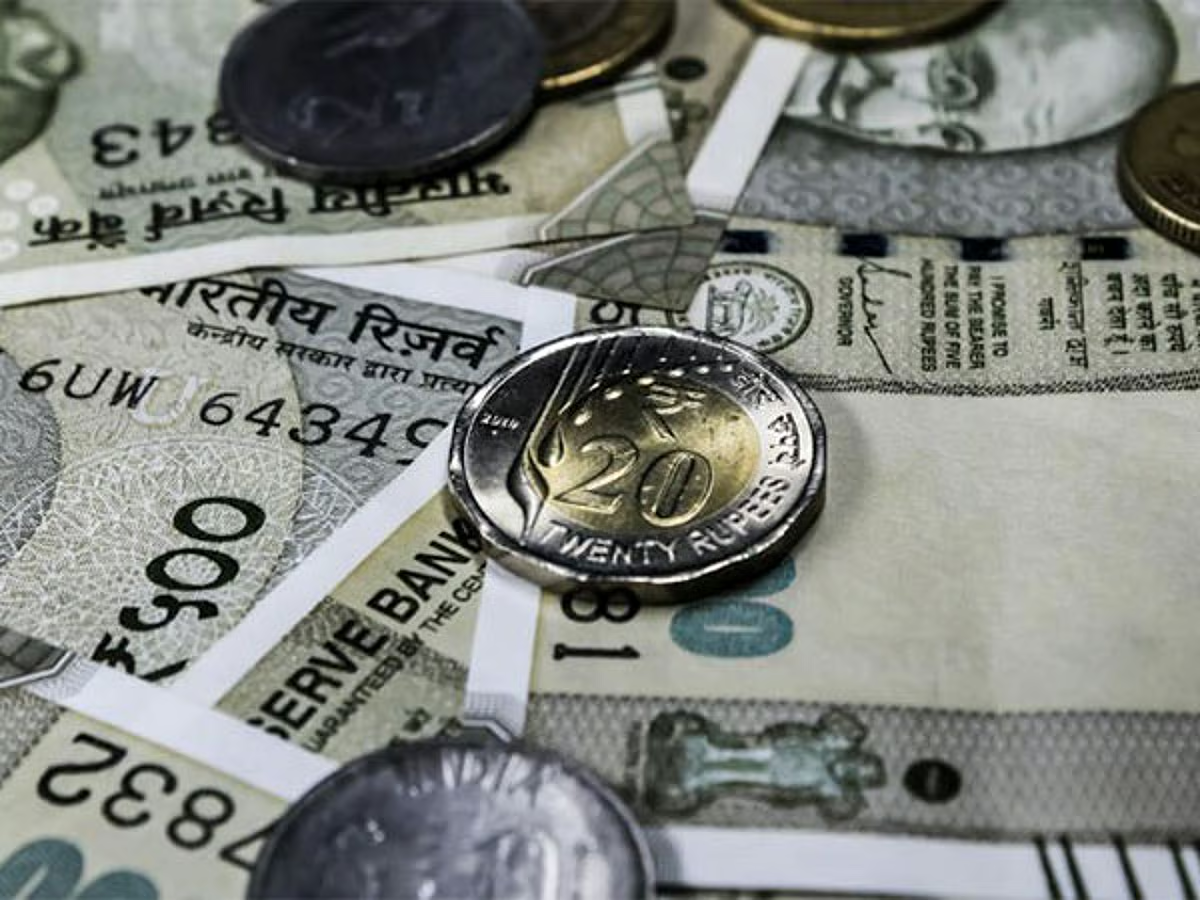
The Reserve Bank of India (RBI) recently reported a significant contraction in India’s external buffer, with foreign exchange reserves dropping by $9.8 billion to settle at $686.8 billion for the week ending January 2, 2026. This marks one of the steepest weekly declines in over a year, sparking discussions among economists regarding the stability of the Indian Rupee (INR) amid global volatility.
Why are India’s Forex Reserves Falling?
Several macroeconomic factors have converged to put pressure on India’s "war chest" of foreign currency:
1. RBI Intervention to Stabilize the Rupee
The primary driver behind the decline is the RBI’s active intervention in the spot and forward markets. As the Rupee faced depreciation pressure against a strengthening U.S. Dollar, the central bank sold dollars to prevent a volatile "free-fall" of the currency.
2. Revaluation Losses
A portion of the $9.8 billion decline is attributed to revaluation effects. India holds reserves in various non-dollar currencies, including the Euro, Pound Sterling, and Japanese Yen. As the U.S. Dollar surged in early 2026 due to anticipated interest rate hikes by the Federal Reserve, the value of these other currencies—when expressed in dollar terms—diminished.
3. Foreign Portfolio Outflows
The first week of January 2026 saw significant selling by Foreign Portfolio Investors (FPIs). According to NSDL data, global investors have pulled nearly ₹15 lakh crore from Indian equities over the last five trading sessions, driven by fears of global trade tariffs and a shift toward "safe-haven" assets.
Is the $686.8 Billion Level Still Safe?
Despite the sharp drop, India’s current reserve level remains robust. At $686.8 billion, the reserves are sufficient to cover over 11 months of projected imports for FY26.
Financial analysts at Bernstein and other global brokerages suggest that while the decline is notable, it does not yet signal a crisis. However, if reserves continue to slide toward the $650 billion mark, the RBI may have to allow for more natural depreciation of the Rupee to conserve capital.
Impact on the Indian Economy
- Import Costs: A weaker Rupee, combined with falling reserves, could make essential imports like crude oil and electronics more expensive, potentially fueling imported inflation.
- Borrowing Costs: Corporate India, which relies on External Commercial Borrowings (ECBs), may face higher hedging costs as the currency remains under pressure.
- Investor Sentiment: Persistent declines in reserves can sometimes lead to a "wait-and-watch" approach by Foreign Direct Investors (FDI).
Conclusion
The $9.8 billion plunge is a stark reminder of India’s vulnerability to global monetary shifts. While the Reserve Bank of India has ample ammunition to defend the currency for now, the trajectory of the U.S. Dollar and global trade policies in 2026 will be the ultimate decider of India’s fiscal resilience.
Popular posts

India's Talent behind the JIO 5G roll ou...
 The BharatBiz
20 Apr, 2024
The BharatBiz
20 Apr, 2024
 16
5190
16
5190

How to calculate GDP of a Country
The BharatBiz
02 Oct, 2023
16
5526

Positive Impact Of Demoniterization
The BharatBiz
04 Sep, 2023
16
5197